
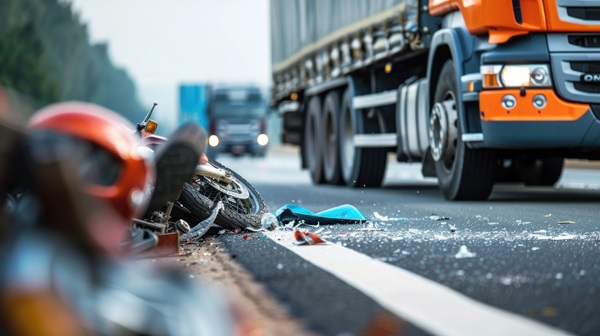
Collisions Between Motorcycles And Trucks Are Often Catastrophic
There’s no margin for error when a motorcycle shares the road with an 18-wheeler. One rider is exposed, balanced on two wheels, relying on visibility and reaction time. The other is a massive commercial vehicle with wide blind spots, long stopping distances, and limited maneuverability. When something goes wrong, the outcome isn’t measured in dents or repairs. It’s measured in life-altering injuries.
At Fried Goldberg LLC, our lawyers have handled cases across the country involving collisions between motorcycles and commercial trucks. Whether we’re representing injured riders or working with plaintiff’s attorneys on complex trucking litigation, these cases demand a clear understanding of how and why they happen.
May is Motorcycle Safety Awareness Month, which puts a needed focus on the risks riders face every day. When those risks intersect with the size and force of an 18-wheeler, the consequences are often severe.
What Makes Motorcycle-Truck Accidents So Dangerous?
Motorcycle accidents are already high-risk events. Add a commercial truck into the equation, and the danger increases significantly due to physics and visibility.
Several factors contribute to the severity of these crashes:
- Size and Weight Disparity: A fully loaded tractor-trailer can weigh up to 80,000 pounds. A motorcycle may weigh less than 1,000 pounds. That imbalance means the rider absorbs the majority of the force.
- Limited Protection For Riders: Unlike drivers in passenger vehicles, motorcyclists don’t have a steel frame, airbags, or seatbelts to absorb impact.
- Blind Spots Around Trucks: Large trucks have substantial blind spots on all sides where motorcycles can easily disappear from view if a trucker isn't paying attention.
- Long Stopping Distances: Trucks require much more distance to slow down or stop, reducing the ability to avoid sudden hazards.
- Wide Turns and Lane Changes: Trucks often swing wide or drift across lanes, creating dangerous conditions for nearby riders.
When these factors combine, even a brief lapse in attention or judgment can lead to a devastating collision.
How These Crashes Commonly Occur
Motorcycle accidents involving 18-wheelers often follow recognizable patterns. Some of the most common scenarios include:
- Left Turn Collisions: A truck driver turns left across oncoming traffic and fails to see an approaching motorcycle.
- Lane Change Crashes: A truck moves into another lane without noticing a rider traveling alongside or just behind the cab.
- Rear-End Collisions: A truck fails to stop in time and strikes a motorcycle from behind, often at higher speeds.
- Right Turn Squeeze Accidents: A truck turns right while a motorcycle is positioned between the truck and the curb, leaving the rider with nowhere to go.
- Underride and Override Incidents: The rider may be forced under or into the truck due to the height difference and impact force.
Each of these scenarios often comes down to timing and the driver’s ability to recognize and respond to a motorcycle’s presence.
What Evidence Can Help Prove What Happened?
In these cases, the difference between uncertainty and clarity often comes down to evidence. Motorcycle-truck collisions happen quickly, and the rider may not be able to describe what occurred.
Key evidence may include:
- Event Data Recorder Information: The truck’s system can reveal speed, braking, and driver inputs before impact.
- Dash Camera Footage: Both external and in-cab cameras may capture the sequence of events and driver behavior.
- Driver Logs and Dispatch Records: These can show fatigue, distractions, or pressure to meet deadlines.
- Accident Reconstruction Analysis: Experts can evaluate vehicle positions, impact angles, and movement to determine how the crash occurred.
- Witness Testimony: Other drivers may provide critical observations about lane position, signaling, or sudden movements.
When these pieces are brought together, they can establish a clear cause-and-effect chain that explains how the collision occurred.
The Catastrophic Injuries Riders Often Suffer In Truck Collisions
When a motorcycle is involved in a crash with an 18-wheeler, the injuries are rarely minor and often fatal. The lack of protection combined with the force of impact often leads to severe trauma.
Common injuries include:
- Traumatic Brain Injuries: Even with a helmet, the force of impact can cause concussions or more severe brain damage.
- Spinal Cord Injuries: These can result in partial or complete paralysis.
- Multiple Fractures: Arms, legs, ribs, and pelvis injuries are common due to direct impact or ejection.
- Internal Injuries: Blunt force trauma can cause internal bleeding and organ damage.
- Road Rash and Soft Tissue Damage: Severe skin and muscle injuries can occur when a rider is thrown from the motorcycle.
Imagine a scenario involving a motorcycle rider traveling in the right lane who ends up being caught in a truck’s wide right turn. As the truck swings, the motorcycle is forced into the curb or pulled under the trailer, resulting in catastrophic injuries within seconds.
These aren’t just minor medical events. They're life-altering outcomes that affect every part of a person’s future.
Motorcycle Riders Are Often Misjudged In These Cases
One of the challenges in motorcycle accident cases is perception. Riders are sometimes unfairly labeled as reckless or assumed to have contributed to the crash.
In truck accident litigation, those assumptions can influence how claims are evaluated unless the evidence clearly shows what happened.
At Fried Goldberg LLC, our legal team focuses on objective evidence and detailed investigation to counter those assumptions. We also work with plaintiff’s attorneys nationwide who rely on our experience in trucking cases to help build strong, fact-driven claims.
The issue in many of these cases isn’t rider behavior. It’s whether the truck driver saw what they should have seen and acted in time.
Why These Cases Require A Focus On Trucking Regulations
Motorcycle accidents involving commercial trucks aren’t just about driver behavior. They often involve compliance with federal safety regulations and company policies.
Issues that may come into play include:
- Driver Training Requirements: Whether the driver was properly trained to operate the vehicle safely around smaller vehicles.
- Hours of Service Compliance: Fatigue can affect reaction time and awareness.
- Vehicle Maintenance: Faulty brakes or steering systems can contribute to a collision.
- Company Oversight: The role of the trucking company in hiring, training, and supervising drivers.
These factors can expand the scope of liability beyond the driver and shape how the case is pursued.
What's the Importance of Motorcycle Safety Awareness Month?
Motorcycle Safety Awareness Month serves as a reminder that riders face unique risks on the road, especially when sharing space with large commercial vehicles.
National data from organizations like NHTSA consistently shows that motorcyclists are significantly more likely to suffer fatal or serious injuries in crashes compared to occupants of passenger vehicles. When those crashes involve 18-wheelers, the risk increases even further due to the size and force involved.
Awareness isn’t just about prevention. It’s about understanding how these crashes happen and recognizing the responsibility drivers and companies have to operate safely around vulnerable road users.
Talk With A Truck Accident Lawyer Who Understands Complex Motorcycle Cases
After a collision with an 18-wheeler, the path forward isn’t always clear. The injuries are often severe, the evidence may be complex, and the legal issues can involve multiple parties.
At Fried Goldberg LLC, we represent victims of truck accidents nationwide and work with plaintiff’s attorneys to build cases that reflect the full impact of these collisions. If you or someone you care about has been injured in a motorcycle accident involving a commercial truck, give us a call or contact us online to see how we can help you find your way forward.
"Joe, Michael, and their team are incredibly knowledgeable and skilled. Their dedication to their art and helping others is unmatched!" - Mary B., ⭐⭐⭐⭐⭐